
;
Visiondirect.co.uk Blog – Contact lenses – Eye care Home About Shop

Could animals wear contact lenses?

As a nation of animal lovers, lap of luxury cats with diamond encrusted collars and pampered pooches that eat prime steak are not such an unusual occurrence. Many animal lovers maintain their pet’s health more keenly than they look after themselves, as evidenced by the sizeable market for pet health insurance – but can animals really wear contact lenses?

In fact, therapeutic soft contact lenses have been used by vets to treat eye conditions in animals like cats, dogs and horses since the late 1970’s.  Originally designed for human usage, therapeutic contact lenses effectively act like a bandage for the eye, protecting a cornea that is damaged or diseased from the continual friction caused by blinking eyelids.  During the period that the contact lenses are in place – in animals this is usually around five or six days, after which time the lenses fall out – the damaged cornea gets time to heal.

It was human therapeutic contact lenses that were first used in animals, which, perhaps unsurprisingly, often made it difficult to find lenses that were a good fit.  Things have moved on, and since the 1990s there have been contact lenses specifically produced to fit the eyeballs of different domestic pets, while there have been custom made contact lenses manufactured for a range of more exotic animals, including an elephant!

As well as occasionally needing therapeutic soft contact lenses, pets can also suffer from a range of eye conditions that humans develop, including cataracts. In humans, cataracts are treated by removing the clouded lens within the eye, and replacing this lens with a synthetic substitute.  Since around 2005, the same kind of intraocular lenses have been available to treat cataracts in animals.  As well as pets like cats and dogs, a performing sea lion at Sea World in San Diego has had cataracts treated with intraocular lenses, as has a blind kangaroo and a number of brown bears in China!

Leaving aside these surgical implants, tinted contact lenses that sit on the surface of the eye are also becoming increasingly popular as a cosmetic solution for dog owners, and can cover up damage or disfigurement to the animal’s eyes.  While a range of these contact lenses are now made specifically for dogs of different sizes, measuring the curvature of the cornea prior to fitting is not standard practice (as it is in humans), and so a bit of trial and error is often involved before the right shape of lens is found.

How do eyes become bloodshot?

Eyes can become bloodshot for a quite a number of reasons.  Whatever the trigger, whether it is trying out new contact lenses for the first time, an eye infection, or the start of hay fever season, bloodshot eyes occur when blood vessels on the surface of the eye become dilated or enlarged.  Both the sclera (white of the eye), and the thin membrane which covers the sclera and lines the eyelids, the conjunctiva, contain many tiny blood vessels that are not usually visible.  Irritation or damage to these tissues in the eye causes the body to rush blood to this area, a process which allows repair to take place, and it is this increase in blood supply that causes the dilation of blood vessels which result in bloodshot eyes.

When bloodshot eyes are caused by wearing contact lenses the solution can be fairly straightforward.  Often, the use of eye drops can be enough to restore moisture and combat the irritating dry eyes that can sometimes result from wearing contact lenses, particularly when trying out a new prescription.  However, the most important thing to note is that the first course of action should always be to remove contact lenses when bloodshot eyes occur, after which you should seek a professional medical assessment of the cause of the condition if symptoms persist.

Various infections can cause bloodshot eyes, and some of these have the potential to be serious, and require medical attention.  Bacterial conjunctivitis (pink eye) will often require treatment with antibiotics, although this uncomfortable condition rarely has any profound long term effects.

Other conditions like Blepharitis – an inflammation of the eyelids and eyelashes – and Uveitis, an inflammation of the uvea, can also result in bloodshot eyes.  Bloodshot eyes are also a symptom of corneal ulcers, which can develop for a number of reasons and again require medical treatment.

As well as resulting from the introduction of various foreign objects to the eye, and infections, bloodshot eyes can also be an indicator of several lifestyle issues.  These can range from fatigue and eyestrain to the use of certain medicines, like blood thinning drugs, or the overuse of alcohol, and smoking.  Kidney stones and liver disease can also cause bloodshot eyes, as can diabetes or being pregnant.  A poor diet and vitamin deficiencies can again be triggers, or you may simply be stressed and anxious.  Viruses such as glandular fever and mumps can also cause bloodshot eyes.  If the condition occurs late at night or early in the morning, and passes quickly, you can chalk it down to the pace of life, but bloodshot eyes occurring for any length of time should prompt a trip to the doctor.

What are differences between peroxide and all-in-one contact lens solutions?

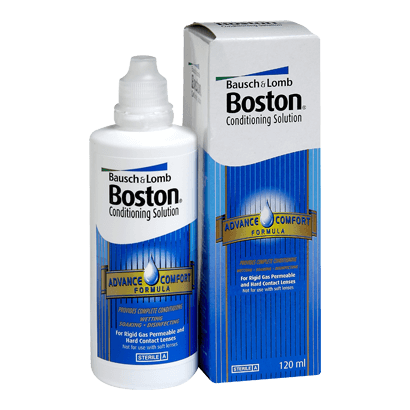
Cleaning regime should be priority for every contact lens wearer, using monthly, weekly or long term replacement contact lenses to ensure good hygiene and avoid eye infections. Finding a suitable contact lens solution to a reasonable price is not always easy, with so many options. There are two common groups of contact lens solutions; peroxide and all-in-one. We will look into the features and uses of these, who they are suitable for and how they compare.

Who can best use peroxide contact lens solution and why?

  • Peroxide solution is preservative free. If you had any allergic reaction to an all-in-one solution in the past, or just sensitive, you would therefore be better off using a peroxide solution.
  • As peroxide solutions requires a waiting process, it is convenient to leave overnight at home on a daily basis. People with a 9-5 job, or with similar routines will likely find this cleaning system more convenient.
  • Hygiene caution is easier with peroxide solution, as it cleans more effectively.

How it works? Peroxide solution cleans lenses through a catalyst chemical process with acid, where contact lenses are ideally left overnight while the peroxide solution transforms into water. Depending on make of solution, manufacturers specify minimum times to leave lenses soaking; 20 minutes – 6 hours. If lenses are used before the neutralization process finishes, it can damage the eye and will sting, burn, cause red eyes and irritation. To avoid problems like these, it is advisable to read the manual and buy saline as a complement to rinse lenses with.

The neutralization process works in one of 3 ways:

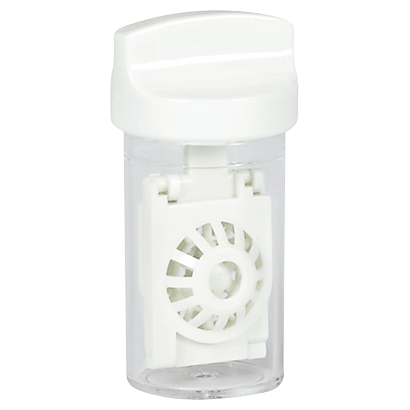
  1. Most common is a small metal disc fitted to the standing lens case, reacting with the solution.
  2. Another option is a 2 step system, where you use one solution to disinfect and another solution to neutralize.
  3. An older, more uncommon system, is using a neutralizing tablet in the solution. These would sometimes change colour of the liquid to indicate when neutralizing process is done.

All-in-one contact lens solution in contrast, is one complete liquid solution, normally with preservatives, that is first used to rub the contact lenses and subsequently poured into a flat lens case for storage.

Who can make use of all-in-one contact lens solution?

  • A flat lens case can easily be brought along when travelling, as can travel size solution bottles. People on the go, with flexible lifestyles can benefit from this.
  • Saving money. In general, all-in-one solution is cheaper than peroxide solution.
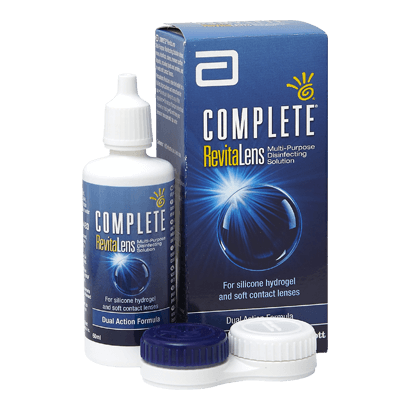
  • Greater choice. All-in-one solution comes in more variations, some especially designed for silicone hydrogel lenses e.g.

Hopefully the information in this post helped you to know the difference between all-in-one contact lens solution and peroxide contact lens solution, when it can be useful and how to use it.

The importance of early eye exams

As those who routinely buy online contact lenses will know, regular eye exams are important to make sure that the prescription you are wearing is still suitable, as the condition of the eyes can change over time.  However, there are several other reasons to ensure that you have regular eye examinations throughout the course of your life, and this applies not only to those who already buy online contact lenses, but also those who have yet to be diagnosed with any health issues as the result of an eye exam.

Early eye exams in children can pick up a range of conditions, some of which can worsen if left untreated.  Strabismus, or misaligned eyes is one such condition, and can lead to Amblyopia, commonly known as lazy eye.  Lazy eye is in fact a bit of a misnomer, as the eye itself is often otherwise healthy, and the problem is actually concerned with the transmission of images from the eye to the brain.  Poor transmission of these visuals leads to underdevelopment of the area of the brain that should process the signals from the eye, and so the condition is most effectively treated in early childhood while the brain is still developing.

While you might think that the term ‘early’ eye exams refers to testing during the early years of life, regular eye exams can also pick up the initial stages of a range of conditions before symptoms manifest.  Some of these can threaten the complete loss of vision if left untreated, like glaucoma and wet macular degeneration, while others are wider health problems with the whole body, such as diabetes.

As well as picking up diabetes, a 2011 study conducted in the US found that eye exams were often the first medical test that picked up chronic diseases such as hypertension (high blood pressure), and conditions like high cholesterol.  In fact, in 65% of patients with high cholesterol, optometrists were the first health care professionals to detect the condition, while the same was true for 20% of diabetes diagnoses, and 30% of cases of hypertension.  Eye exams can even pick up signs of brain tumours developing.

The reason for these figures is that the eyes provide the only non-invasive means to get an unobstructed view of blood vessels, making eye exams the only practical way to screen otherwise healthy people for the early stages of potentially serious conditions yet to cause more noticeable symptoms.  All in all, this means that regardless of the fact that your online contact lenses are giving you near perfect vision, regular eye exams are an essential routine for monitoring your health throughout your life.


Real life ‘digital’ enhancements – the power of coloured contact lenses

What do celebrities, wedding parties, and houses for sale in an estate agents window all have in common?  The answer is that all three are routinely photographed, but in the modern world you are unlikely to see any of these pictures entirely as they were ‘in the flesh’.  Modern techniques of digital data storage – and more specifically manipulation – have meant that enhancing reality is now standard practice, with the name of the popular software package Photoshop now in common usage as an adjective for altering images.  However, these novel techniques for touching up images are merely a continuation of a far older trend, which began in various human cultures many centuries ago, and continues today through the use of things like coloured contact lenses, make-up and hair dye.

Cosmetic alteration or enhancement has been practised in real life by both men and women for thousands of years. While modern cosmetics continue to develop with technology, applying make-up is perhaps the oldest known technique in the toolbox.  However, when it comes to the ‘windows to the soul’ the opportunities for alteration have been limited to merely painting around the organs until relatively recently.  The introduction of coloured contact lenses which are comfortable enough to wear on a regular basis took place only a few decades ago.  Altering the appearance of natural eye pigmentation through the use of coloured contact lenses may at first glance appear to be a cosmetic superficiality, but several well regarded pieces of research have found that different eye colours can have quite a profound effect on the beholder.

Blue eyes are regarded as attractive throughout the world, and the rules of attraction can have powerful consequences.  One of the most striking examples is the fact that no American presidential candidate from Richard Nixon until the election of Barack Obama has been elected with anything other than blue eyes.  Since blue eyes are caused by a recessive gene – meaning that both parents must carry this gene for their offspring to have blue eyes – this ocular colouration has been in decline in the U.S.A since at least the turn of the 20th Century.  Now it seems that blue coloured contact lenses may be a necessary part of the package for any aspiring presidential candidate in the modern age!

Other recent research has found that pronounced, dark limbal rings (which frame the coloured part of the eye, the iris) make both sexes appear more attractive.  Apparently, the findings of this new research were known many years ago to Japanese schoolgirls, who have used special ‘limbal’ contact lenses to create a dark ring around the iris for years.

The difference between monthly and weekly disposables

Since the introduction of the first soft contact lenses in the early 1970’s the development of disposable contact lenses has continued to produce new products almost every year.  Each new polymer used to construct contact lenses brings new properties, from the possible shape the lenses can maintain to the amount of oxygen that the material lets through to the eye. These and other factors determine the optimum replacement time for the lenses, and as you are no doubt aware there is now a choice of weekly contact lenses, or daily disposables, and even monthly contact lenses.  Each is designed to cater for different users with different needs.  Let’s now look at the difference between weekly contact lenses, and the monthly options.

Before we begin, the most important point to note about weekly contact lenses – and indeed all disposable lenses – is that the name of the product is just a rough indication of correct usage.  It is essential to follow the specific advice of your optometrist (optician) when it comes to the replacement regime for disposable lenses.  For some people, weekly disposables can actually be worn for up to two weeks, while for others seven days will be recommended.  The same applies to monthly disposables, in fact even more so, as extended wear (also called continous wear or silicone hydrogel) monthly lenses can be worn for a month, day and night, while monthly disposables require cleaning every night, just like weekly disposables.

Part and parcel of the usage instructions for monthly and weekly disposables is the cleaning regime.  Both types of contact lenses need to be removed at night, and cleaned with a solution. Most monthly disposables also require a little extra help when it comes to removing the proteins that can build up on the lenses.  Again, it is essential to follow the advice of your optometrist when it comes to looking after disposable contacts.

So apart from the replacement times, what are the differences between monthly and weekly disposables?  Well, it is in fact the shorter wear time of weekly disposables that make them more suitable for people with sensitive eyes, such as those who suffer from allergies and dry eyes.  The shorter life of weekly disposables means that there is simply less time for potentially irritating proteins to build up when compared to monthly contact lenses.

Monthly disposables can actually be worn from between one and three months, and this is mainly due to the fact that they tend to let more oxygen through to the eye than weekly disposables.  Monthly disposables are the hassle-free option for those with suitable eyes, and can also often be a more affordable option than weekly disposables, although the cleaning regime is more complicated thanks to the additional need to regularly deal with protein build-up.


Where does the UK stand in the development of eye care?

Given the importance of sight for negotiating normal life it should come as no surprise that the field of eye care is such a significant branch of medicine, and an international concern.  As patients, many of us in the UK require only a few hours of medical attention for our eyes over the course of a lifetime, independently buying contact lenses online for a number of years, punctuated only by fairly brief regular eye exams.  As with many things in life it can be easy to take the routine for granted, whether this is the purchase of contact lenses online, or regular eye tests.  However, it is in fact one of these seemingly mundane elements of the eye care provided in this country that makes the UK one of the front runners amongst the developed countries of the world.

While those used to buying contact lenses online should be well aware of the importance of regular eye tests for monitoring the prescription worn as the eyes change over time, the wider importance of these tests for those yet to receive medical attention for their eyes has formed a cornerstone of the development of eye care in the UK in recent years.  The UK contribution to the World Health Organisation Vision 2020 resolution – which is aimed at reducing preventable sight loss throughout the world by the year 2020 – has focused on the simple but highly effective reorganisation of the way patients are referred to Ophthalmologists (eye doctors).

Optometrists (opticians) are still the first point of contact for members of the public looking for an eye test.  Previously, if the optometrist had any concerns following an eye exam a referral would be made to GP.  Only then, after a further assessment by the GP, could a patient possibly see an ophthalmologist.

During the development of the UK Vision Strategy in Scotland, the lag between the initial eye test and finally seeing an ophthalmologist was identified as critical.  During this delay, many treatable conditions – such as Wet Age-related Macular Degeneration (AMD), and glaucoma – were deteriorating to a point where treatment was difficult if not impossible.  Wet AMD in particular has only a short window for effective treatment – early on in the development of the condition – and so seeing an ophthalmologist as quickly as possible is absolutely vital.  Optometrists can now refer patients directly to ophthalmologists, fast tracking those that need to be treated quickly, and bypassing the need to GP referral.

In the U.K. the challenge is not a lack of quality facilities for treatment – as it is in many parts of the developing world – but ensuring that the monitoring of eye health is frequent enough to be effective.  To this end, eye tests in Scotland are now free, in a bid to encourage more people to get checked out on a regular basis, and get early treatment for preventable conditions.


How to read a contact lens prescription and find the lenses you need online

The purpose with this post is to enable contact lens users to understand when and how to read a contact lens prescription and use this knowledge to easily locate and buy their lenses online.

A way to easily locate the correct type and make of contact lenses suitable to your eyes, is to use the sample lenses (trials supplied by your optician). When you have the original lens containers and/or packaging available, you can compare measurements (material, water content, base curve and diameter) to ensure you are ordering the same contact lenses online that you were originally fitted with by your optician. A handy point of advice is using the search field on Visiondirect.co.uk and type the material name (e.g. “nelfilcon A“) to perform an effective search. If you find several products, narrow down by comparing the remaining measurements.

If you no longer have the samples available, you better make sure to get it right by reading your contact lens prescription (the paperwork supplied by your optician). Contact lens prescriptions differ from spectacles prescriptions in the following ways:

  • If BC (base curve) and DIA (diameter) are missing, then you can be fairly certain that you are looking at a glasses prescription which does not apply to contact lenses necessarily.
  • If your optician failed to mention that you need corrective lenses for astigmatism*, but you still identify the values CYL (cylinder) and AXIS (measurement in degrees) printed on your paperwork, there is a risk you are looking at a spectacles prescription. When you do need toric contact lenses, the make of lens, BC and DIA are normally supplied in connection with the values CYL and AXIS.
  • The manufacturer, make and type of your contact lenses should normally be stated on the contact lens prescription. (However, since some opticians do not take the time to make a note, this is not always the case.)
  • SPH or SPHERE is a measurement for the primary power or strength needed. For myopia (nearsightedness) the value is negative (-) and for hyperopia (farsightedness) the value supplied is positive (+).
  • ADD is an additional power and refers to presbyopic patients (presbyopia = a condition that occurs as you age and the lens inside your eye becomes less flexible); one power (SPH) to correct nearsightedness and another power (ADD) to correct farsightedness. This is normally corrected by using varifocal (bifocal or multifocal) contact lenses.
If you are still struggling with understanding your opticians’ handwriting or, despite advice above, cannot make out what contact lenses you need then feel free to open a live chat session where one contact lens expert will be happy to assist.

* What is astigmatism again? Your eye (or lens) is shaped in an oval form rather than a circular form. This is a defect most of us are born with, but to a very small extent, where spectacles toric correction is required, but for contact lens correction, more rarely so.

The evolution of contact lenses – what has changed?

As early as 1508 Leonardo Da Vinci provided a description of what is widely held to be the first crude blueprint for contact lenses in his paper: Codex of the Eye, Manual D.  DA Vinci’s was actually concerned with the properties of a bowl of water for altering the focal power of the cornea, rather than describing contact lenses worn on the surface of the eye, but the principle of altering the refractive power of the eyes through direct contact with a transparent medium was present nonetheless.  Thankfully things moved on a bit over the years, and the technology behind contact lenses got a bit more practical than carrying around a bowl of water as a vision aid!

Moving past the theoretical developments proposed by Enlightenment thinker Descartes in the 17th Century, and the crude contact lenses constructed by the British scientist Thomas Young in the 1801, the first pair of contact lenses which were tolerable to the wearer were produced by a German glassblower called F.E. Muller in 1887.  This invention swiftly underwent development in the same year by countryman Adolf Fick, an ophthalmologist who understood how to tweak the production process to alter refraction, and these thick lenses were worn by placement on the sclera, or white of the eye

However, it was not until 1949 that the first truly usable contact lenses were developed (Fick’s could only be worn for a few hours at a time).  This was the advent of modern contact lenses as we know them, lenses worn directly on the cornea of the eye.  These corneal contact lenses could be worn for up to 16 hours at a time, but the shortcomings of this technology then became apparent over the next couple of decades.  Basically, these lenses did not let oxygen pass through to the cornea and surrounding conjunctiva, with this lack of oxygen having the potential to create a swelling of the cornea, and other problems.

The first solution to this problem was the Rigid Gas Permeable (RGP) lens, which as the permeable part suggests does let oxygen through to the eye.  However, some wearers found RGP lenses uncomfortable, which drove the development of soft lenses.  Soft contact lenses also allow oxygen to pass through the eye, but are generally more comfortable in a shorter space of time, as they will change shape to fit the wearer’s eye (those using RGP contacts generally require a period of time to get used to the lenses).

One more recent development is silicone hydrogel (oil based) contact lenses, which allows a higher oxygen transmission to the cornea that regular hydrogel (water based) soft lenses. Because silicone hydrogel contact lenses contain less water content than traditional hydrogel lenses, they do not dry as easily therefore they can be better suited for dryer eyes than traditional hydrogels.

The evolution of contact lenses continues to this day, and in a nutshell this process is all about developing different materials – with different properties – with which to construct the lenses.

Eye yoga – what is it?

Eye Yoga has attracted quite a lot of attention in the last few years.  Sir Paul McCartney famously got involved in the eye yoga debate when he made an instructive video a couple of years ago, while many who wear contact lenses and spectacles have been attracted by various claims that eye yoga can prevent and even correct vision problems.  So just what is eye yoga, and can it really remove the need to wear contact lenses?

Perhaps the easiest way to describe eye yoga is to first take a look at just what Yoga entails.  Yoga a bit of a catch all term that describes various meditative techniques which focus on physical, mental and spiritual aspects of the human condition.  While Yoga originated in India thousands of years ago and continues to be important part of religious practice for many, the Yoga techniques most popular in the West today are centred around physical meditation.  This physical meditation involves exercises aimed at improving health by both training various muscles, and allowing them to properly relax.  While promoting physical fitness, this focus on the body is also a way of relaxing the mind, and while this may sound a little metaphysical, many Western medical practitioners recognise this meditation as a valuable way of reducing stress and stress-related physical problems.

So Eye yoga is the application of Yoga principles to exercising the muscles in and around the eye, and the aim of these exercises is twofold.  In training the muscles that move the eye it is hoped that function can be improved or maintained, particularly in older people who will often naturally lose muscle condition as a part of the aging process.  The second effect of this focus on the physical should be a greater ability to relax, and therefore prevent or address muscle tension.  This tension can result either from mental stress, or the physical eye strain associated with things like prolonged usage of computer display screens.  Of course, experiencing both causes of physical and mental stress simultaneously is not uncommon in the busy modern world.

But can practising eye yoga eventually make your contact lenses redundant?  Well, on this point there is unfortunately no hard medical evidence.  There is also no evidence that practising eye yoga will harm your health, and so as a stress reduction technique there is no reason not to give it a try.  Even Paul McCartney has had a go – check out the YouTube video!